Project: Chords of Change
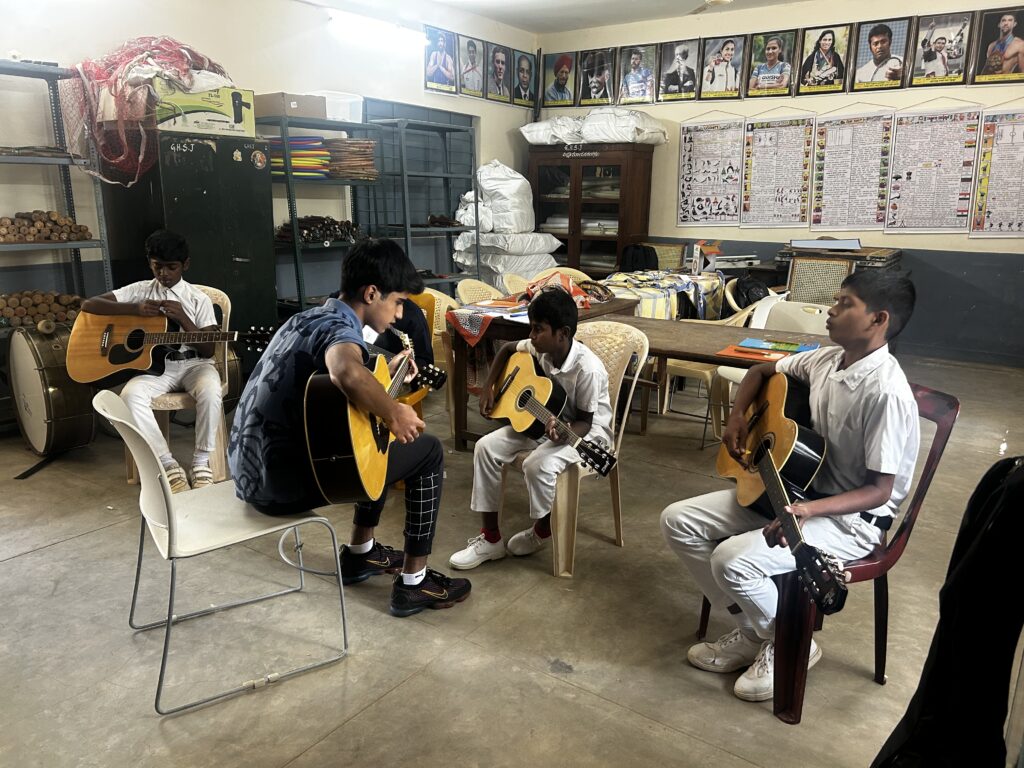
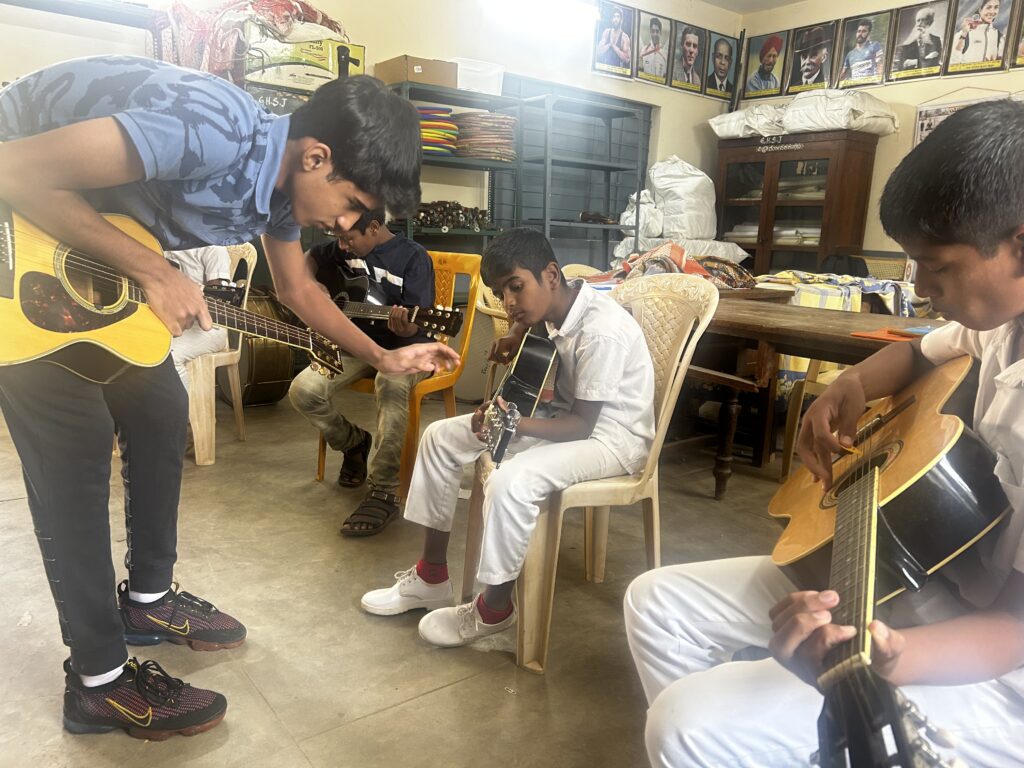
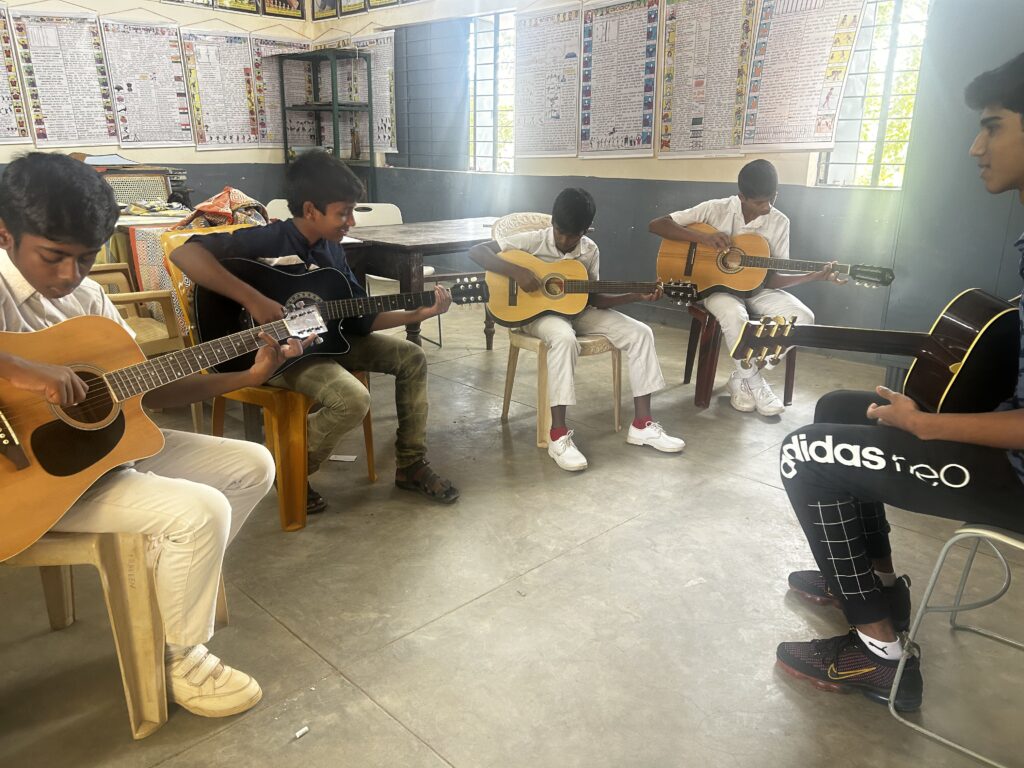
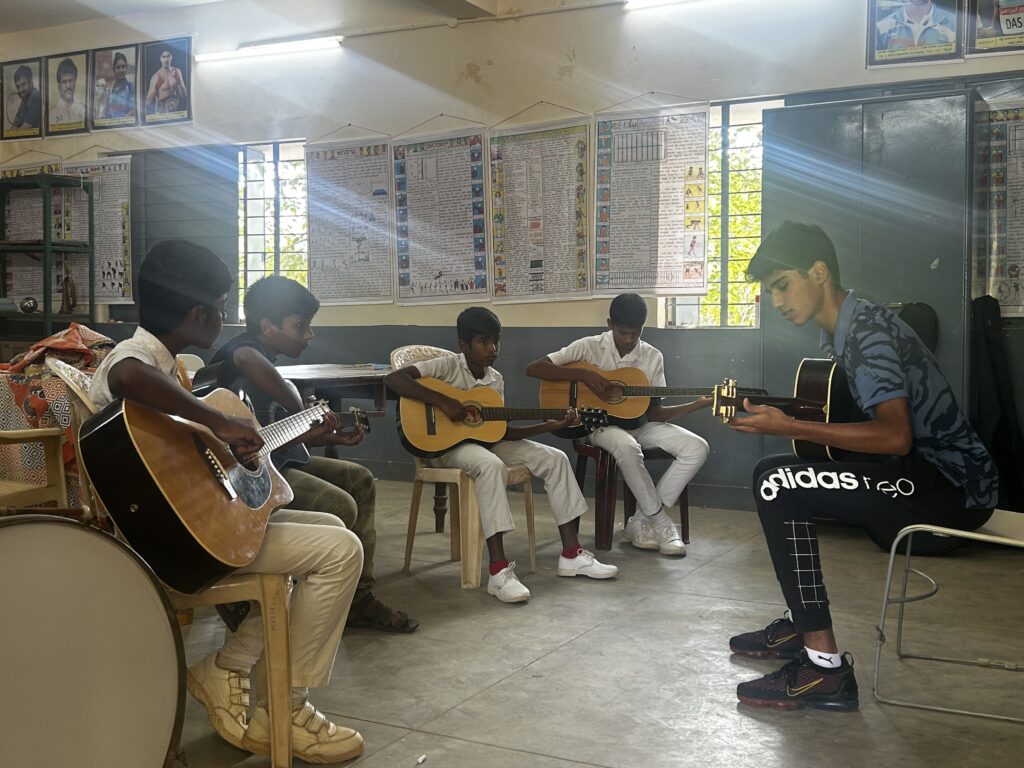
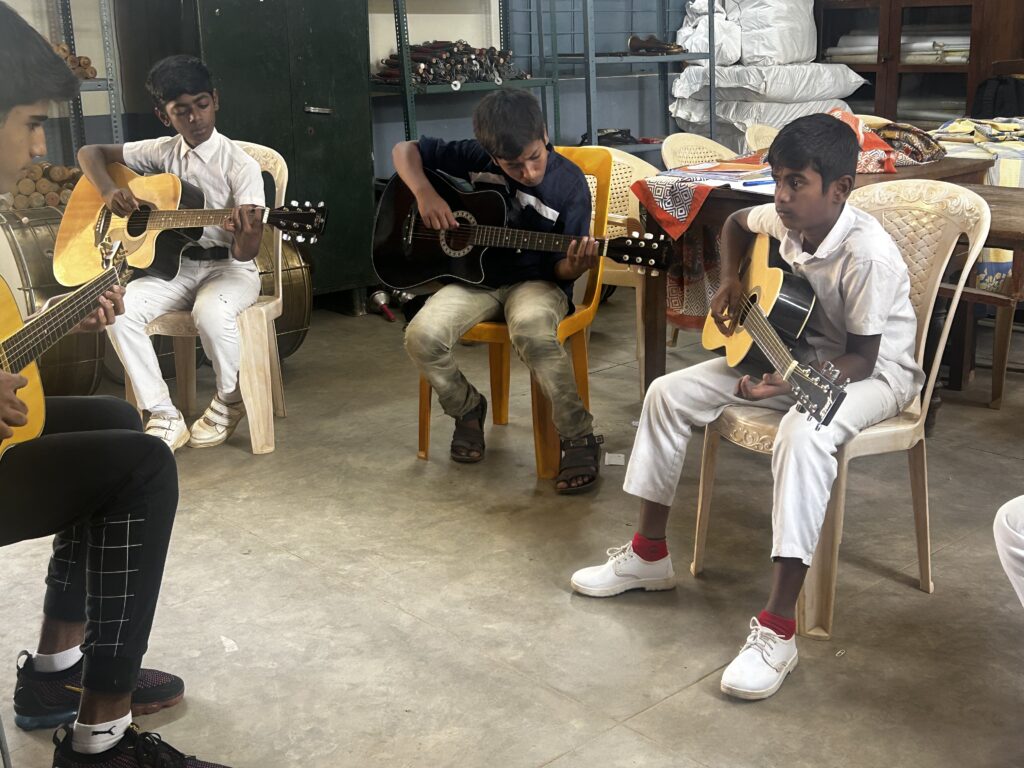
Chords of Change is a journey of transformation, blending the power of music with a commitment to uplift others. Here I teach guitar to underprivileged children and this initiative seeks to inspire growth, empowerment and hope. Each action is a step toward creating a legacy of positive change that resonates far beyond today, giving these children a lifelong skill.
The Goal: To empower the kids with a skill and if possible, have them perform on stage in front of an audience in a year’s time.
This project started with me going to the nearby government school in my neighbourhood, to identify their needs and wants. I wanted to help the children in some way, and I went there with the mindset that I would probably be providing them with academic help. Unfortunately however, they did not have a music teacher at school and it struck me: I could combine my passion for guitar and for giving back to society to create a valuable impact. Immediately, I went and spoke to the vice-principal there, to ask if I could do this project. He said that he would need to get government authorisation for it. I waited for about a week and they got back to me with good news, a green light!
I took 2 guitars on loan from my local guitar store after informing them about the cause, and I aim to finance these guitars through some fundraising. I also requested people from my community to donate their old guitars if they were not using them. Totally, I now had 5 total guitars, which was my target since I had 5 students keen on learning!
Now, I go there on a weekly basis, taking 1 to 1.5 hour classes and teach all the interested children in a classroom at no cost.
Here’s the lesson plan (what was completed in each class):
Class 1:
- Introduction: Parts of the guitar and their functions.
- How to hold the guitar and correct posture.
- String names and numbers (6th to 1st string).
- Tuning basics
- Activity: Plucking each open string in order (E, A, D, G, B, e).
Class 2:
- String names and numbers (6th to 1st string).
- Basic plucking technique: Downstroke and upstroke.
- Activity: Learned the ‘Happy Birthday’ song
Class 3:
- Introduction to open chords: A major, D major and C major
- Practice holding and strumming the chords.
- Activity: Playing a chord progression using the three learned chords
Class 4:
Revision of A major, D major, and C major chords.
Introduction to chord switching smoothly.
Activity: Practice simple chord transitions (A → D → A, C → D → A).
Class 5:
Introduction to G major chord.
Practice strumming with steady rhythm.
Activity: Play a 4-chord progression using C, G, D, A.
Class 6:
Revision of all learned chords (A, C, D, G).
Introduction to basic rhythm counting (1-2-3-4).
Activity: Group strumming practice.
Class 7:
Introduction to E minor (Em) chord (easy beginner chord).
Practice smooth switching between Em and G/C.
Activity: Simple chord progression practice.
Class 8:
Basic strumming patterns (down-down-up-up-down).
Revision of all chords learned.
Activity: Rhythm game and strumming exercise.
Class 9:
Introduction to reading chord diagrams.
Practice recognizing finger placement independently.
Activity: Identify and play learned chords.
Class 10:
Learn a very simple song using chords learned so far.
Focus on timing and strumming together.
Activity: Group performance.
Class 11:
Revision class.
Focus on improving chord changes and reducing pauses.
Activity: Chord switching challenge.
Class 12:
Introduction to A minor (Am) chord.
Compare major vs minor sound.
Activity: Practice simple progressions using Am.
Class 13:
Introduction to E major chord.
Practice finger positioning and smoother transitions.
Activity: Play progression with E and Am.
Class 14:
Rhythm and strumming improvement.
Practice changing chords while maintaining rhythm.
Activity: Group strumming circle.
Class 15:
Introduction to simple tabs (tablature).
Reading numbers on strings.
Activity: Play a simple melody using tabs.
Class 16:
Revision of tabs and chords.
Practice combining melody and chords.
Activity: Mini performance in pairs.
Class 17:
Introduction to palm muting (basic sound control).
Experiment with soft vs loud strumming.
Activity: Rhythm exercise.
Class 18:
Learn another beginner-friendly song.
Focus on confidence and timing.
Activity: Group performance.
Class 19:
Revision of all open chords learned.
Chord switching speed practice.
Activity: Timed chord change challenge.
Class 20:
Introduction to F major (easy version).
Practice finger stretching and placement.
Activity: Simple progression with F.
Class 21:
Introduction to basic fingerpicking (thumb and finger plucking).
Activity: Pluck simple string patterns.
Class 22:
Fingerpicking practice with simple chords.
Activity: Play a slow melody with chords.
Class 23:
Rhythm revision and strumming practice.
Activity: Play along with a metronome or clap beat.
Class 24:
Learn another simple song using mixed techniques.
Activity: Small group practice.
Class 25:
Revision of all concepts learned so far.
Chords, tabs, rhythm, fingerpicking.
Activity: Quiz/game on guitar basics.
Class 26:
Practice confidence and posture improvement.
Focus on playing without looking too much at fingers.
Activity: Pair practice.
Class 27:
Song practice and polishing.
Improving smooth transitions and timing.
Activity: Group rehearsal.
Class 28:
Introduction to simple performance techniques.
Playing together and listening to others.
Activity: Ensemble practice.
Class 29:
Full revision class.
Practice final songs and techniques.
Activity: Mock performance.
Class 30:
Final performance and reflection.
Students showcase what they learned.
Activity: Group performance and feedback.